How to plan a birthday dinner people actually remember
A practical planning guide for birthday dinners in the United States

Most birthday dinners are booked in the wrong order. Someone picks a restaurant, then discovers it cannot seat fourteen, will not allow an outside cake, and has a 9:15pm table on a Saturday. Reverse the order and the night gets easier.
Start with the guest of honour, not the restaurant
Two questions decide almost everything:
- Does this person want to be the centre of attention, or would they rather it feel like a great dinner that happens to be theirs?
- Who has to be there for it to feel right?
A surprise party for someone who hates surprises is a planning failure no restaurant can rescue.
Lock the headcount early
Group size determines the venue list more than cuisine does. In most US restaurants the thresholds look like this:
- 2 to 6 - a standard reservation, widely available.
- 7 to 12 - a large table; many venues will ask for a card to hold it.
- 13 to 25 - semi-private space, often a set menu and a food-and-beverage minimum.
- 25+ - private dining or a buyout, usually a contract and a deposit.
Ask for a firm yes or no from every invitee before you call the restaurant. "Probably" is how a table for twelve becomes a table for eight with an F&B minimum you still owe.
Collect dietary needs before you pick the menu
Ask everyone directly instead of hoping. In practice you are looking for vegetarian, vegan, gluten-free, dairy-free, nut and shellfish allergies, and anyone avoiding alcohol. One question in the group chat saves an awkward conversation with a server in front of the birthday guest.
If your group includes a serious allergy, tell the restaurant when you book, not when you arrive. Kitchens can almost always accommodate with notice and almost never at the pass on a Saturday.
Choose atmosphere deliberately
Ask three things when you call or check the listing:
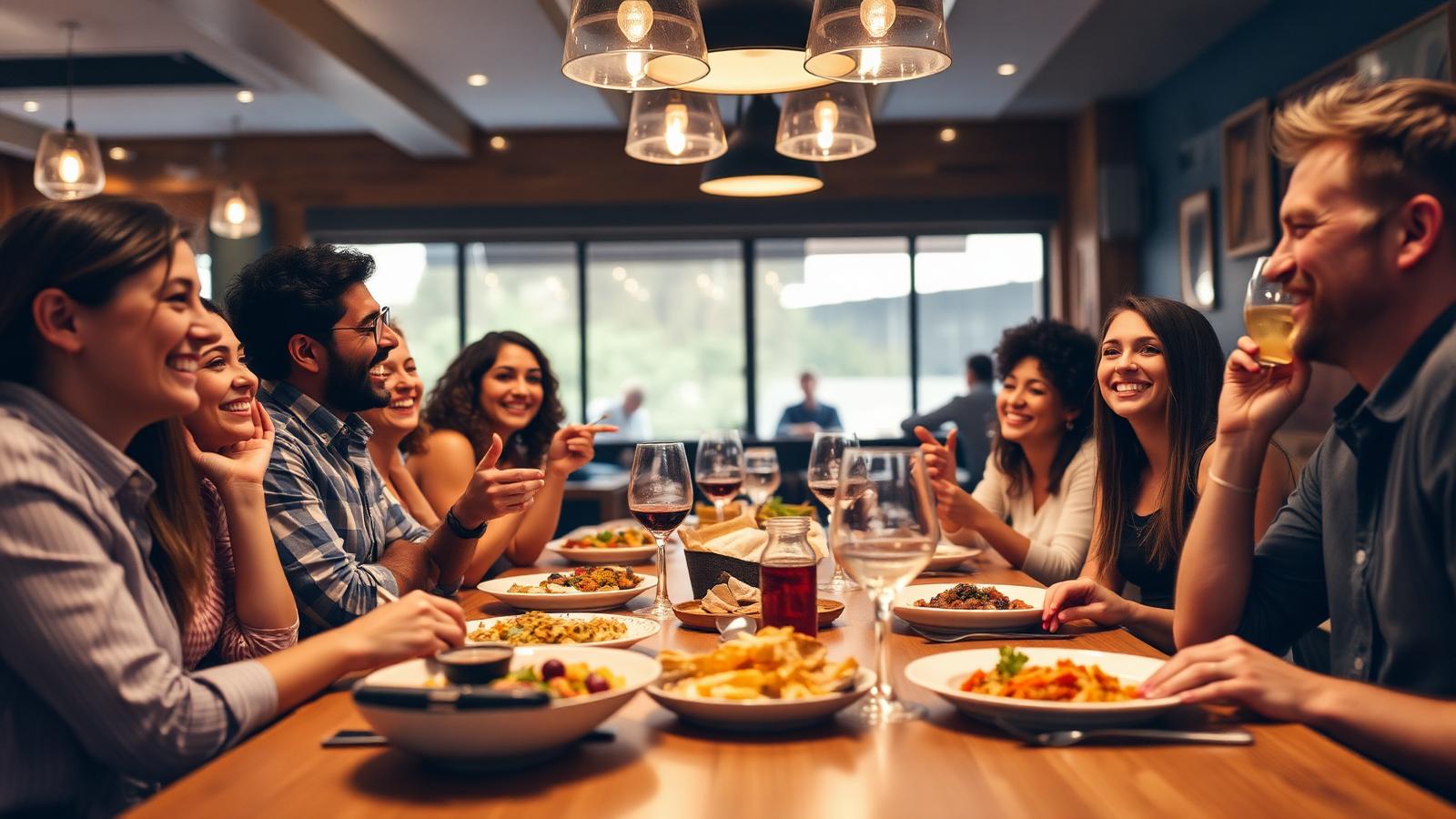
- Noise. Can a table of twelve hear each other? Loud rooms kill conversation and any chance of a toast.
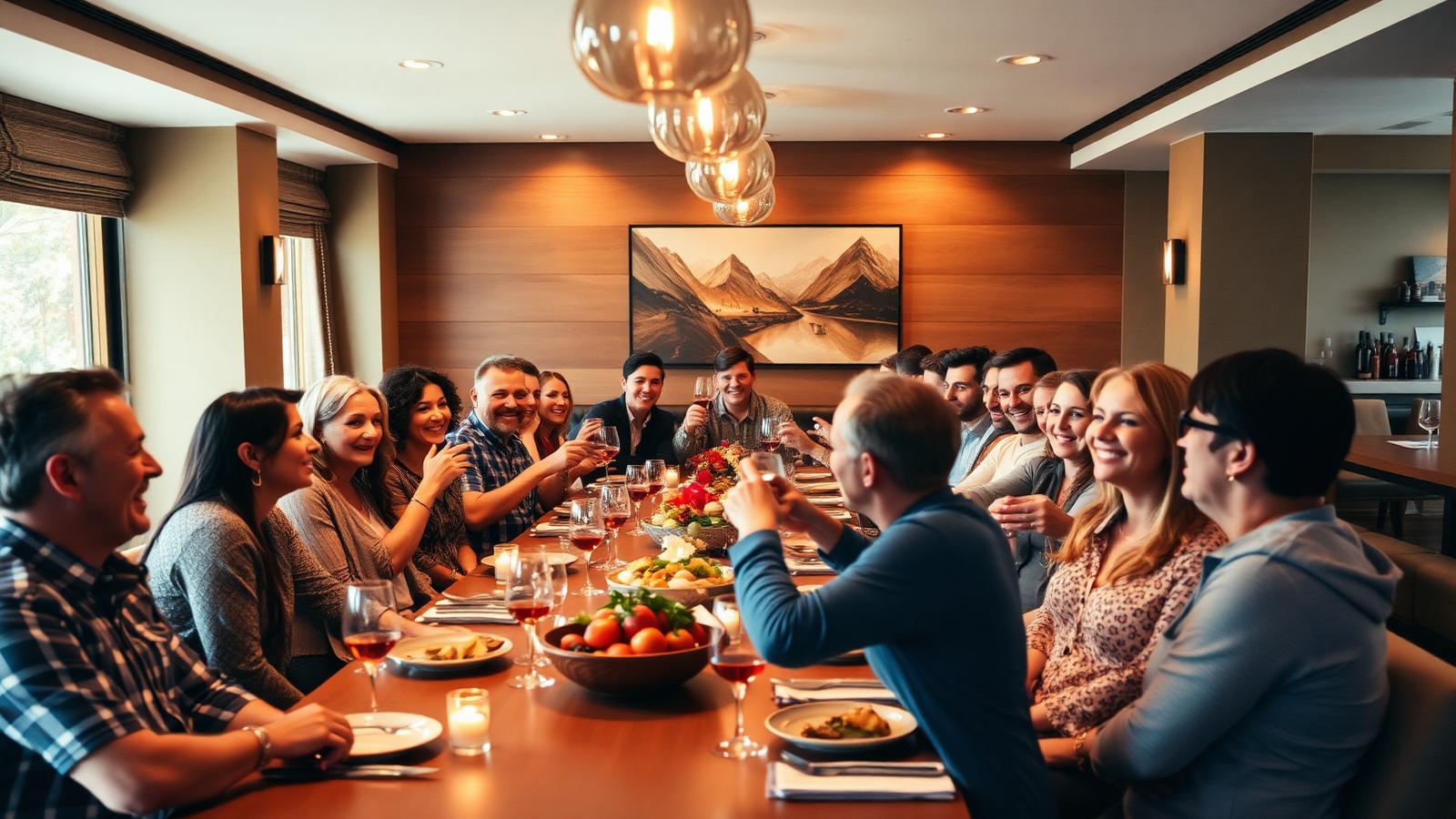
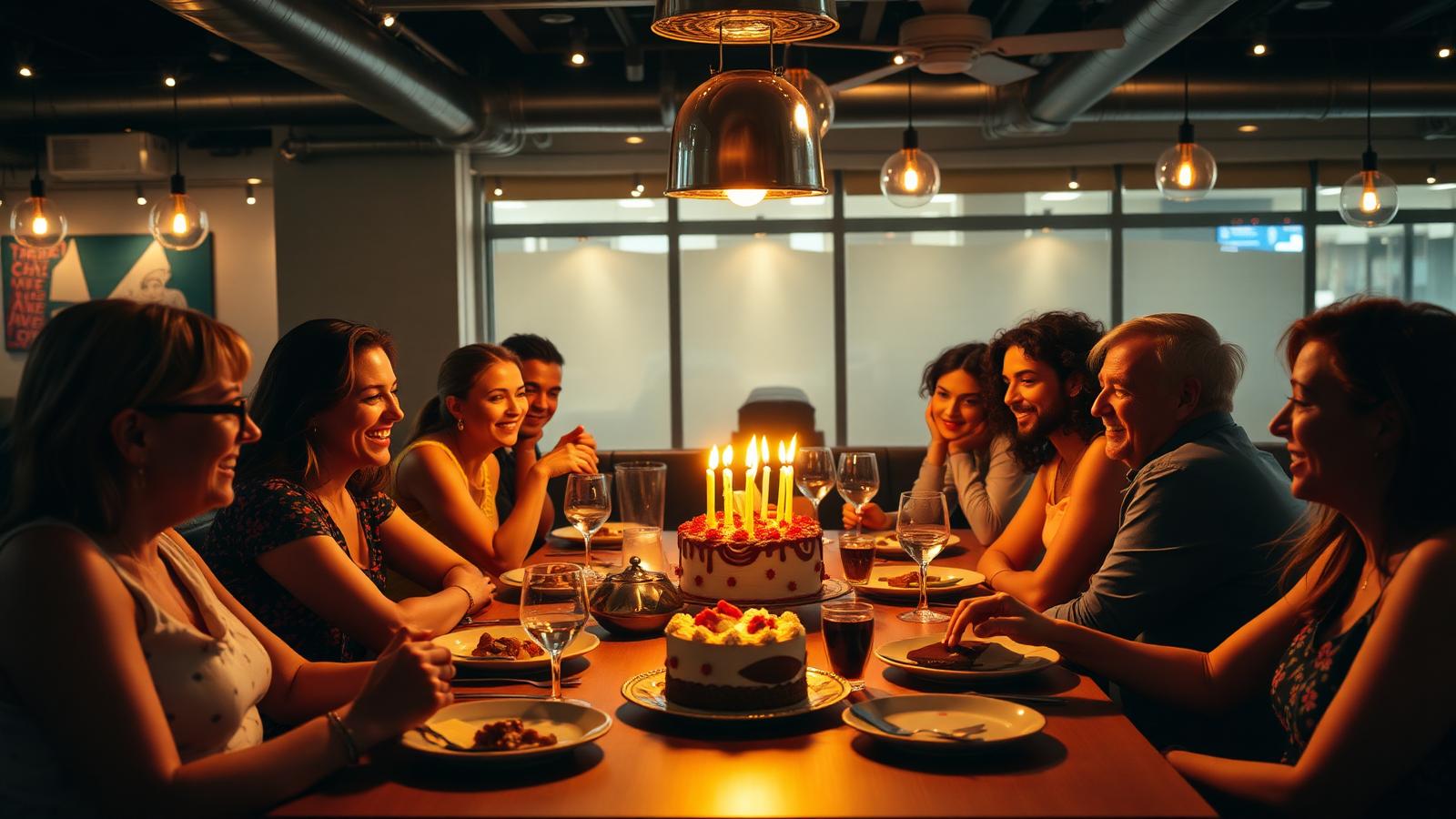
- Table shape. One long table beats three separate fours if you want a single celebration.
- Timing. Early seatings are quieter, cheaper and easier to hold. A 5:45pm reservation on a Saturday is a genuine advantage.
Handle the menu format
For groups over about ten, most US restaurants will suggest a limited or prix fixe menu. Take it. It shortens service, keeps the check predictable and prevents the ninety-minute ordering scrum. Make sure the set menu includes at least one substantial vegetarian entree - not a side plate.
Ask about cake before you buy one
Cake policy varies and it is the most common last-minute problem:
- Some venues allow an outside cake with a per-person cakeage fee.
- Some require the cake to come from their kitchen or an approved bakery.
- Some cannot store or refrigerate a cake at all.
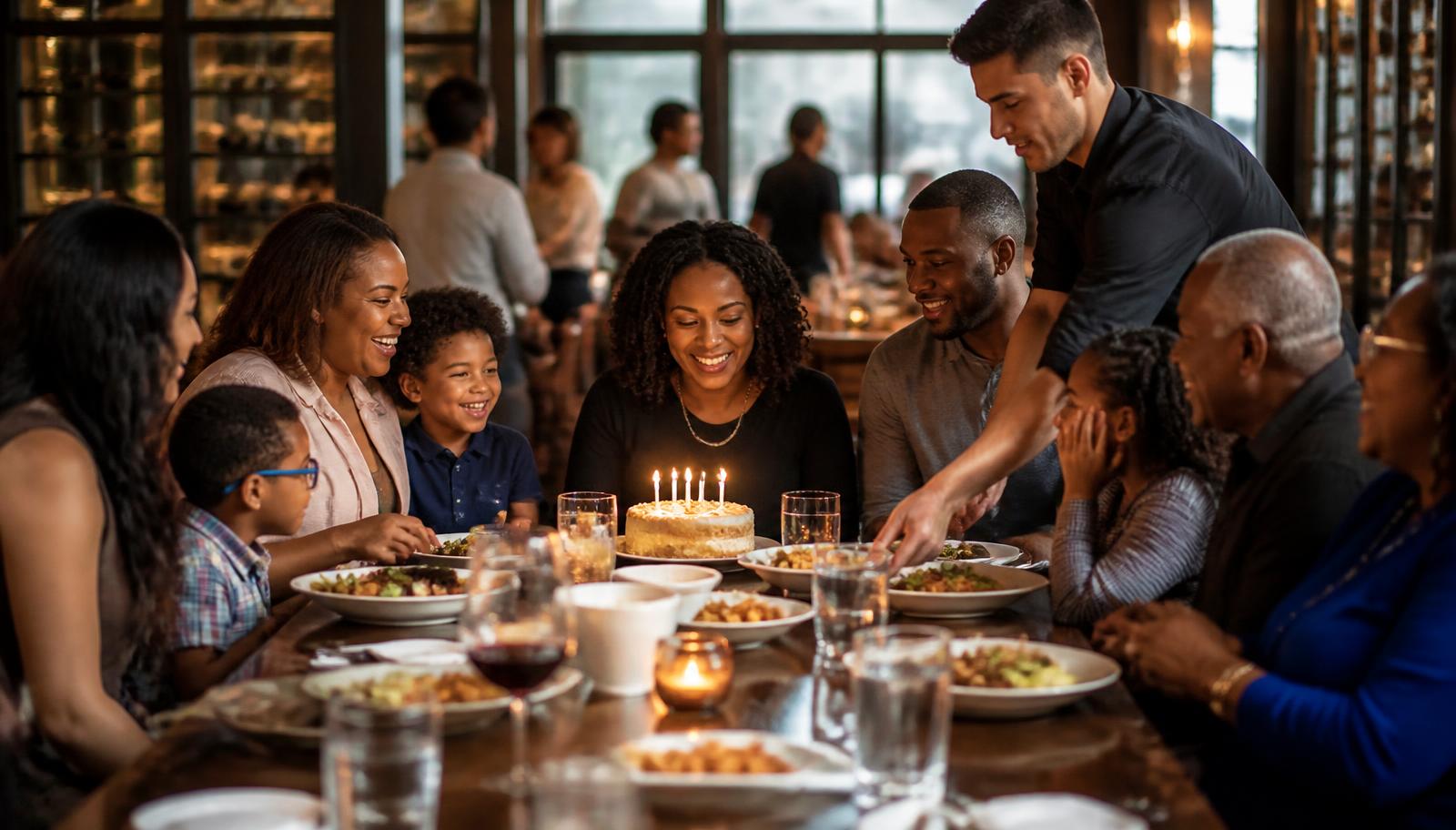
Confirm the policy, the fee, drop-off time, and whether the staff will bring it out with candles. Then decide whether you want the full house-lights-and-singing version or a quiet plate with one candle.
Keep decor simple and legal
Most restaurants allow a small centrepiece, place cards or a banner on the back of a chair. Many prohibit open flames beyond candles on the cake, glitter, confetti and anything taped to walls. Ask, then bring less than you think you need. A well-lit table beats a cluttered one.
Plan the photos on purpose
Nobody plans photos, and afterwards everyone wishes they had. A few habits that work:
- Take the group photo early, before food arrives and while everyone still looks fresh.
- Ask one person to be responsible for it. Diffused responsibility means no photos.
- Get one clean shot of the guest of honour with the cake, and one of the whole table.
- Share to one album afterwards so the photos survive the week.
Some venues run photo and memory experiences - a selfie wall or memory mirror - which solves the group-photo problem without handing a phone to a stranger. If you are booking through amealio, memory capture is part of the planning flow rather than an afterthought.
Get the reservation details in writing
Before you hang up, confirm: date, time, party size, deposit or F&B minimum, cancellation window, cake policy and fee, dietary notes and how the check will be split. A confirmation email prevents the "we have you down for six" conversation at the door.
Decide how you are paying
For a group, decide in advance and tell people. Common approaches in the US: the host covers the guest of honour and everyone else pays their share; the table splits evenly excluding the guest of honour; or one person pays and collects afterwards. Many kitchens will not split a check more than a handful of ways on a busy night, so plan for one card plus a settle-up app.
A simple timeline
- 3 to 4 weeks out: guest list, headcount, date.
- 2 to 3 weeks out: book the restaurant, confirm cake and dietary needs.
- 1 week out: confirm final numbers, order the cake, send the address and time.
- Day of: arrive fifteen minutes early, hand over the cake, take the group photo.
What not to do
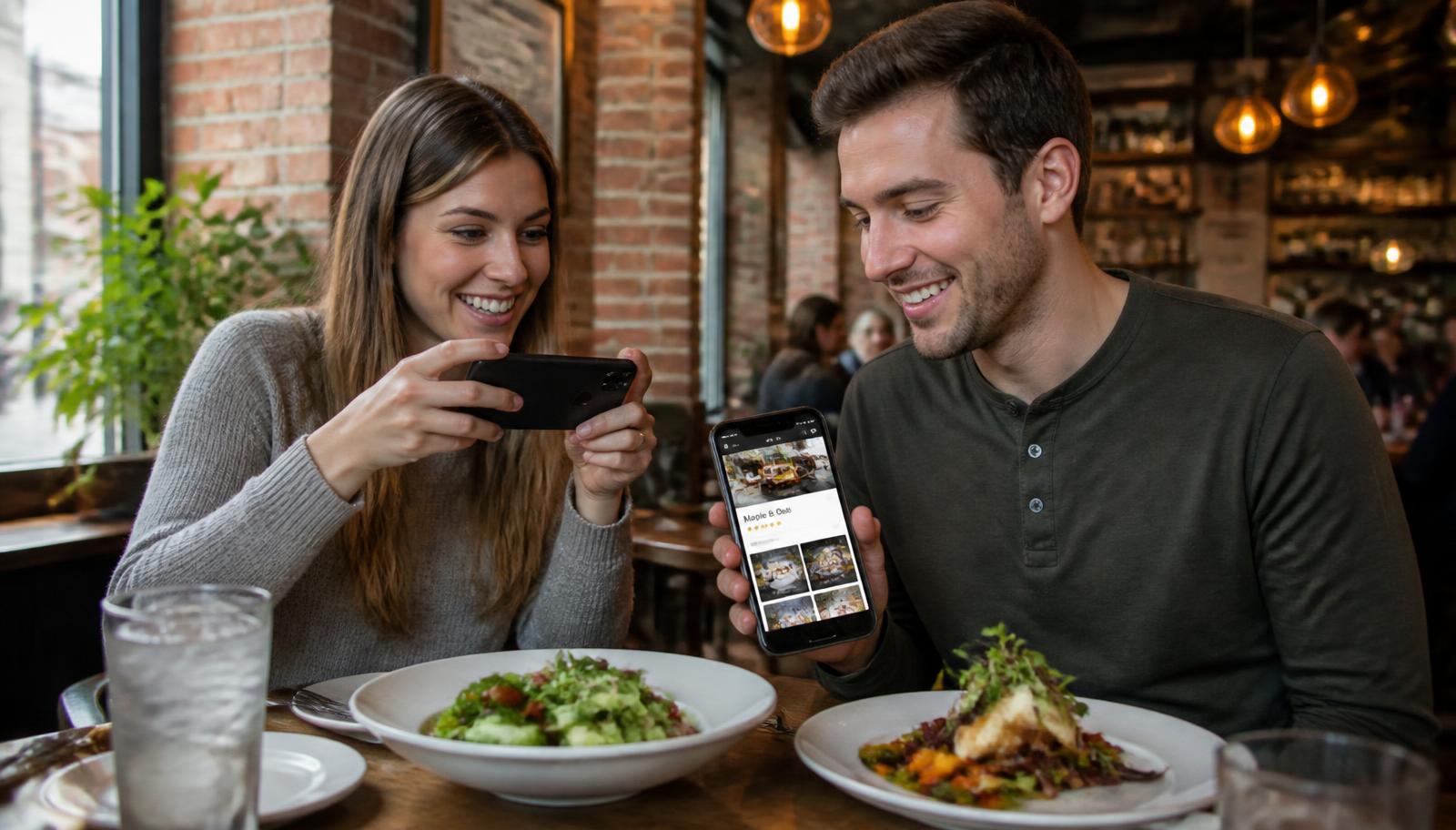
Do not chase a "best restaurant" list for a birthday. Those rankings optimize for critics and averages, not for your group's dietary needs, budget, noise tolerance and travel time. The best restaurant for this dinner is the one that can seat your people, feed all of them, and let you hear the toast.
Read next
Join the conversation
- Be the first to comment.